4x4 Campervan: When 4Motion or AWD Pays Off and When Front-Wheel Drive Is Enough
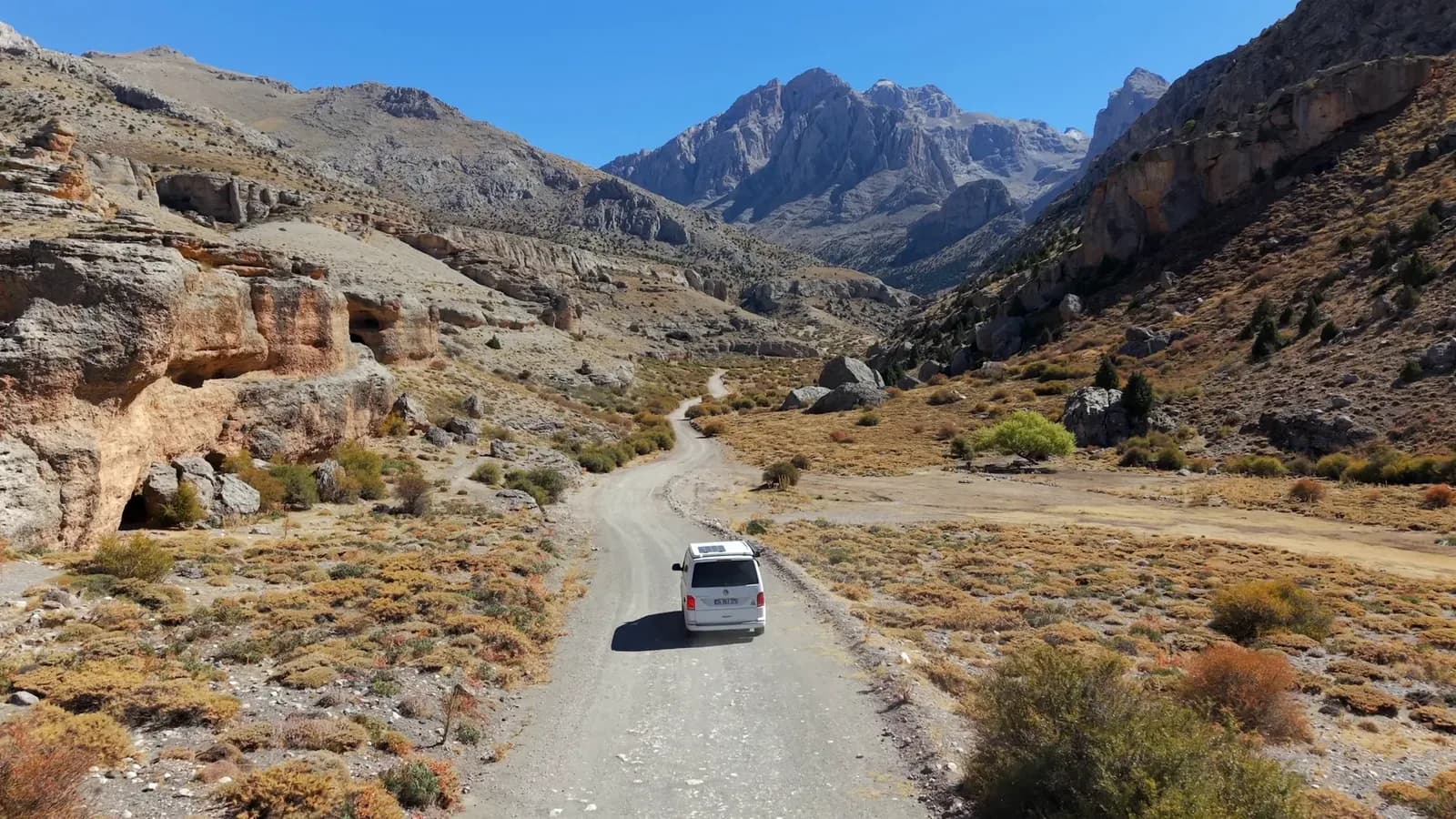
A 4x4 campervan pays off if your travel profile regularly includes loose ground: wet meadows, gravel tracks, snowy access roads, steep forest paths. On tarmac and made-up pitches, 4Motion or 4x4 adds little but costs weight and fuel. Even with all-wheel drive, a camper van does not become an off-road vehicle.
Three questions decide: where do you park overnight? Which season do you travel in? And how much payload do you need for people, water and luggage?
What all-wheel drive actually does in a campervan
A converted van is heavier than the panel van it started as, and its centre of gravity sits higher. On firm ground that makes no difference. It becomes critical where the front wheels alone no longer find grip:
- Wet grass: the classic case on campsites after rain, at festival sites and on grass pitches. With front-wheel drive the wheels spin when pulling away on a slight slope; with the rear axle engaged, the van usually gets out under its own power.
- Gravel and farm tracks: uphill on loose ground, all-wheel drive spreads the drive power across four wheels and stops the front wheels from digging in.
- Snow on access roads: pitches near ski resorts, mountain passes, farm drives. All-wheel drive helps when pulling away and climbing.
- Trailers and boat ramps: with a load on the tow hitch and wet concrete under the wheels, traction at the rear axle is a noticeable advantage.
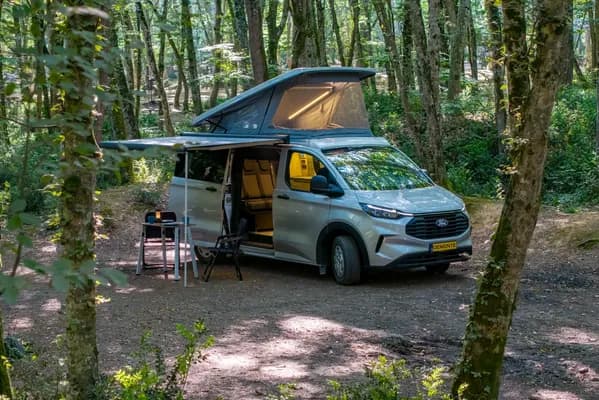
Every current layout we build is available with all-wheel drive: the Cappadocia with 4Motion on the VW Transporter T5–T6 series, the New Cappadocia on the new Transporter, the Assos on the Ford Transit Custom and the two layouts with a bathroom on the long wheelbase.
What all-wheel drive cannot do
- Brake in a shorter distance: a 4x4 vehicle does not brake better on snow than a front-wheel-drive one. There, the tyres decide.
- Tackle rough terrain: the systems in the Transporter and Transit Custom engage the rear axle automatically and have no low-range gearing. They are built for traction on poor surfaces, not for rocks and deep mud.
- Raise the ground clearance: all-wheel drive does not lift the vehicle. Grounding on kerbs and cross-ditches is just as possible with 4Motion as without.
- Create payload: propshaft, rear differential and clutch add weight, which on a 3.5-tonne vehicle comes straight off the payload.
promobil takes the same view in its buying guide to 4x4 campervans (in German): on the Ford Transit Custom the emphasis is on traction in difficult road conditions, not on off-roading. Anyone who wants to drive genuine tracks also needs underbody protection, suitable tyres and suspension that can carry the weight. How the suspension can be adapted is described in our article on retrofitting air suspension.
How do 4Motion and Ford 4x4 work?
In these vans, both manufacturers use an all-wheel-drive system that engages when needed. In normal driving the front axle does most of the work; when the electronics detect slip, drive power is sent to the rear axle. Compared with permanent all-wheel drive this saves fuel and is enough for grass, gravel and snow.
VW Transporter T5–T6 series
Here a Haldex clutch engages the rear axle. The Cappadocia is built on this series, model years 2016 to 2024. Volkswagen builds the 4Motion vehicles for it specially for us, and the conversion does not intervene in the drivetrain.
New VW Transporter and new Ford Transit Custom
In the current generation the two share their technical basis. For the Assos, the 4x4 vehicles come directly via Ford Türkiye and are prepared for conversion at the factory; the engines on offer are the 2.0 EcoBlue with 150 and 170 PS, combined with a torque-converter automatic. You configure the new Transporter in our custom vehicle order with 170 PS and automatic, as either 4x2 or 4x4; the 4x4 version gets underbody protection.
What the shared base otherwise means for the choice between the two brands is covered in our comparison VW Transporter or Ford Transit Custom as a camper.
What does 4x4 cost beyond the surcharge?
The vehicle manufacturer sets the surcharge for the all-wheel-drive base vehicle. It is only part of the bill, though. An honest calculation includes:
- Fuel consumption: the additional drivetrain adds friction and weight. Compare the WLTP figures of the front-wheel-drive and the all-wheel-drive variant of the same engine.
- Payload: the extra weight is missing later for water, luggage and passengers. Ask for the weighed unladen weight of the finished camper.
- Tyres: all-wheel drive only delivers its benefit with suitable tyres. In wintry road conditions, tyres with the Alpine symbol (3PMSF) are compulsory anyway.
- Maintenance: the clutch or transfer case and the rear axle have their own service points, such as the oil change of the Haldex clutch on the T5–T6 series.
One point argues for deciding early: 4x4 cannot sensibly be retrofitted to these vans, because it affects the gearbox, propshaft and rear axle. It is chosen with the base vehicle or not at all.
Do you need 4x4? Four typical travel profiles
- City breaks, coast, campsites in summer: front-wheel drive is enough. Put the money into energy, a pop-up roof or heating instead.
- Skiing and winter: all-wheel drive helps on snowy access roads. More important are winter tyres and a heater that starts reliably in frost.
- Pitches on meadows, forest tracks, Scandinavia in autumn: all-wheel drive is the insurance against getting stuck, and against having the campsite warden tow you out with a tractor.
- Tracks and rough terrain: all-wheel drive is a prerequisite but not enough on its own. Underbody protection, tyres and suspension are part of it.
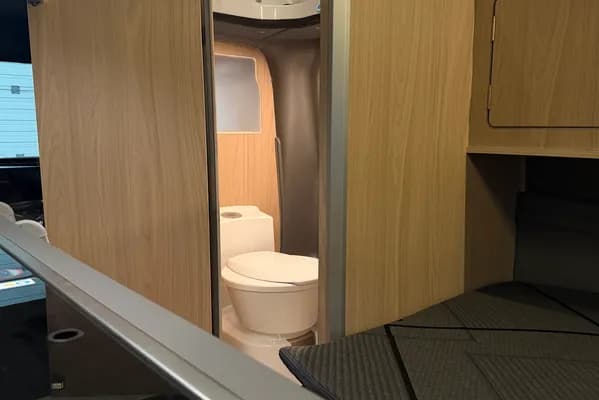
For equipment for the cold season, from heating to the winter tyre requirement, our guide to winter camping in a campervan helps. And if you want to combine 4x4 with a bathroom on board, the trade-offs are covered under campervan with a bathroom.
Frequently asked questions about 4x4 campervans
Is 4Motion permanent all-wheel drive?
No. On the VW Transporter and Ford Transit Custom the all-wheel drive engages automatically: in normal driving the front axle does most of the work, and when the wheels slip, power is sent to the rear axle. Compared with permanent all-wheel drive this saves fuel and is enough for grass, gravel and snow. There is no low-range gearing as in an off-roader.
Is 4x4 worthwhile for a camper in winter?
When pulling away and climbing on snow, yes, especially on steep access roads to pitches and ski resorts. When braking and steering, all-wheel drive brings no advantage; there, tyres with the Alpine symbol (3PMSF) and an adjusted speed decide. A front-wheel-drive van with good winter tyres is sufficient on cleared roads.
How much more fuel does a 4x4 camper use?
That depends on engine, gearbox and driving profile. In principle, the additional drivetrain and the extra weight raise consumption compared with the same vehicle with front-wheel drive. Reliable figures come from the WLTP data for the particular base vehicle; compare both variants with the same engine before you decide.
Can you retrofit 4x4?
Not sensibly on the VW Transporter or Ford Transit Custom, because all-wheel drive affects the gearbox, propshaft and rear axle and is fitted at the factory. If you want 4x4, choose it with the base vehicle. That is why the drivetrain is one of the first decisions settled in a quote for a new camper.
Does the camper conversion interfere with the all-wheel drive?
No. Volkswagen builds the 4Motion vehicles for the Cappadocia specially for us, and the conversion is carried out without intervening in the drivetrain or chassis. The Ford vehicles for the Assos arrive prepared for conversion from the factory. This keeps the base vehicle’s manufacturer warranty intact.
Is the Ford Transit Custom available as a 4x4 camper?
Yes. The Assos is built on the new Ford Transit Custom and is available with front-wheel drive or 4x4, with the 2.0 EcoBlue diesel engines in 150 or 170 PS and a torque-converter automatic. The layouts with a bathroom, Ephesus and Olympos, can also be built on the Transit Custom with the long wheelbase.
Settle the drivetrain in your quote
The rule of thumb: if you know you will regularly be parked on grass, gravel or snow, take 4x4. If you hesitate, front-wheel drive with good tyres is almost always the right choice. All-wheel drive is available on all our current layouts; Demonte Caravan GmbH builds them on the VW Transporter and Ford Transit Custom, each with TÜV SÜD M1-tested seating systems.
Tell us where you park and when you travel — we will recommend the right drivetrain and prepare the quote for base vehicle and conversion.
Get a quote for a 4x4 camper